
Stretching One Product Shoot Into Weeks of Instagram Posts With AI
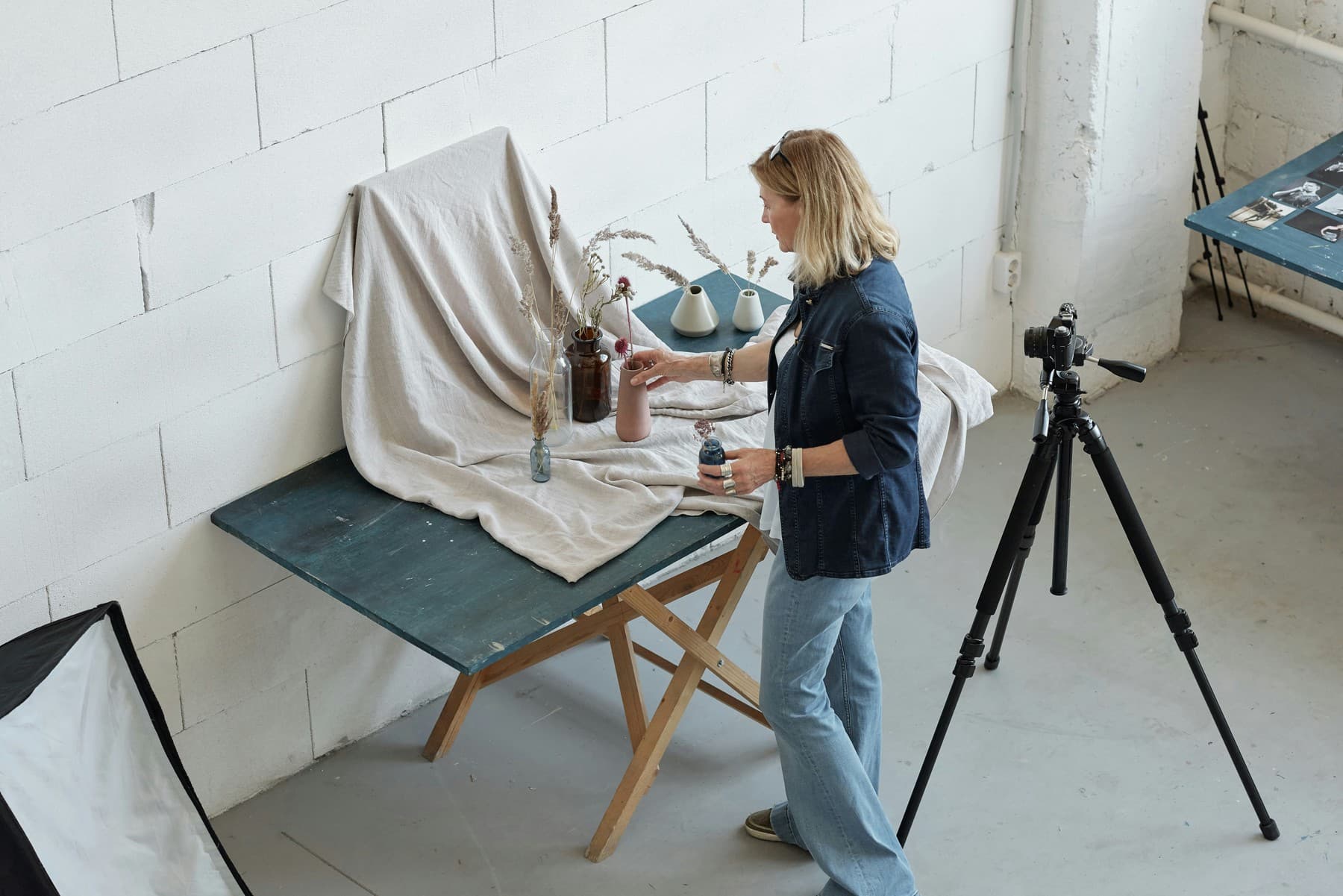
Ecommerce brands can get weeks of Instagram content from existing product photography by using AI to pick strong frames, crop them for each format, sequence carousels, cut short Reels and draft captions. The product itself should stay as photographed. AI handles the presentation around it.
A typical product shoot produces far more usable material than ever reaches Instagram. The hero shot goes onto the product page, perhaps appears once on the feed, and everything else sits in a folder named after the date. That folder is where much of the Instagram opportunity is hiding, and it is where AI can save real time without asking a brand to manufacture a different version of its product.
Single packshots do less
The lone product on a plain background still has a place when one image makes the point on its own. It should not be the default, though. Metricool's 2026 study of more than 24 million Instagram posts found single-image posts lost 21.96% of their reach and 45.98% of their engagement year on year1.
Carousels give the same photography more room. Instagram allows up to 20 photos or videos in one, and a carousel a follower did not finish can be shown to them again later, starting from the slide they missed2. Buffer's 2026 analysis of more than 52 million posts put the median engagement rate for carousels at 6.90%, ahead of every other format3. Metricool also found carousels earn nine times more saves than single images1.
A decent ecommerce shoot rarely produces one useful photograph. It produces the front, the back, the packaging, the label, the texture, the fastening, every colourway and an in-hand shot for scale. Most of those frames stay unused because turning a folder into several distinct posts takes more editorial work than taking the photos did.
What should AI do with the photos?
The tempting use of generative AI is to ask for entirely new scenes: your candle on a marble bathroom shelf, your trainers on a rain-soaked London pavement, your handbag in a hotel lobby that never existed. Every generated scene is another chance for the product to drift away from what the customer will receive. The more valuable jobs are duller, and they are the ones a two or three person business rarely has time for. In practice they look like this:
Consistency deserves more attention than it gets. In Photoroom's survey of 2,000 UK consumers, 63% said variation in product imagery, style or branding makes a seller or marketplace look unreliable4. A feed that mixes warm, daylit flat lays with cold studio packshots reads like two different shops, and colour correction is one of the few AI fixes that costs nothing in honesty.
Captions matter more now that hashtags matter less. Instagram caps posts at five hashtags and uses the language in captions to work out what a post is about2, and Metricool found posts with at least one hashtag drew 31.70% fewer views than average1. That is a correlation and does not prove hashtags hurt, but it does suggest they are not doing much. A caption that names the product, the material and what it is for, in words customers actually use, is the better investment, and AI drafts that well once it has accurate product details and the brand's voice to work from.
Keep the product truthful
There is a clear difference between improving how a product is presented and changing the product a customer thinks they are buying. Photoroom's survey found 55% of UK consumers trust a marketplace less when product images are poorly AI-generated or heavily edited, and only 33% were comfortable with AI-enhanced product images even when clearly labelled4. Photoroom's head of imaging, Jeff Strauss, put the cost plainly: "The fastest way to the bottom is a bunch of returns."5 If AI makes a jumper a richer green, changes a watch bezel or rewrites a label, the image may look better and still bring the parcel back.
Current image models make that kind of mistake often. Photoroom ran 850 real products through four leading image-editing models, 3,400 generations in all, and even the best model passed its product accuracy checks in only 29% of cases6. Photoroom sells ecommerce imaging tools, so the figures deserve some caution, but the failures it describes, from changed logos to missing components, are exactly what a brand needs to check before anything is published.
The workable rule is to separate the product from its presentation. Gymshark used Photoshop's Generative Fill to extend the backgrounds of existing product photos for Instagram, and one of those posts drew close to 52,000 likes7. The AI created more space around the original shot and left the photographed product alone. Exposure, framing, background, crop and slide order are fair game, while colour, shape, materials, logos and text stay faithful to the source.
None of this is about dodging an Instagram penalty. The August 2026 rule that limits reach applies to undisclosed profiles built around AI-generated people, and Instagram said people who use AI to edit photos, polish captions or make graphics do not need the label8. In October, Mosseri said in his weekly Q&A that Instagram does not cut the reach of content simply because AI was involved9. The reason to keep product photography honest is the customer opening the parcel.
Carousels can answer buyers
Once the photos are sorted, the next decision is what each carousel is for. The useful ones answer questions a single hero shot cannot: how big the thing is, what the material looks like close up, what comes in the box and how the colourways differ. Each frame should add one of those answers, so the buyer's questions set the order of the slides. A few shapes come straight out of a standard shoot:
The cover has to earn the first swipe, and every slide after it needs its own reason to be there, because Instagram may resurface a carousel from a slide the viewer has not seen2. The product should stay recognisable all the way through, including the tight detail crops near the end. Carousels built this way get saved, and for an ecommerce brand, content worth saving is usually content that helps someone compare, remember or decide.
Let shoot footage feed Reels
Carousels lead on engagement, but Reels still do the discovery work. Buffer's analysis found Reels reached 36% more people than carousels and 125% more than single images10. Metricool put average Reel watch time at 8.5 seconds, more than double the year before1, and watch time is one of the three signals Instagram says matter most for ranking2.
A small brand does not need a scripted video production to use that. Most shoots already throw off useful footage: the product turning on a table, a hand opening the box, someone fastening a strap, light catching a surface. AI can find the strongest opening moment in those clips, cut the dead time and assemble a tight sequence, so the first second makes sense to someone mid-scroll.
This is the job Asteris.ai's video tools are built for, finding the moment in a brand's own footage with the strongest hook and building the edit around it. Our Instagram tools for ecommerce brands work from a business's own photos and video, with a person approving every post before it goes out. Adding music to a carousel is worth doing too, because it makes the post eligible to appear in the Reels feed2.
Plan the whole week
Once the library is organised, the bigger gain comes from planning across several products instead of producing one post at a time. AI can turn out five polished product pitches in minutes, and five in a row still feel repetitive to someone scrolling. A weekly view shows whether each post is earning its place, and a simple routine for a small team looks like this:
Judge each format by the job it was given. Reels used for discovery should be measured on watch time and non-follower reach, while carousels show their value through saves and sends, and sends count slightly more when Instagram decides whether to show a post to people who do not follow you2. Over a few months those numbers show whether close-up carousels earn saves, whether in-hand shots make better covers and which clips hold attention at the start of a Reel. AI becomes more useful from there, because it is working from the brand's own evidence instead of generic Instagram advice.
Change the next shot list
The usual order is to shoot for the product page and then see what can be salvaged for Instagram. Once a brand starts getting several posts from each shoot, the shot list changes: more in-hand images for scale, more tight details, every colourway in matching light, the best genuine lifestyle frames and a few seconds of video from each setup. That costs little while the camera, lighting and product are already in place, and better source material gives AI fewer reasons to invent what it cannot see.
Used badly, generative AI saves an hour and produces a product image the parcel cannot live up to. Used to sort, crop, match, sequence, edit and plan photography the brand already owns, it recovers the hours that kept those photos unpublished in the first place. The person who knows the product still decides what goes out, and the AI takes the repetitive work off their hands.
One shoot will not fill a feed forever. Handled this way, though, a single afternoon with a camera can supply weeks of specific Instagram posts, and every one of them still shows customers the product they will actually receive.
Sources
Footnotes
Photoroom survey of 2,000 UK consumers on product-image consistency, AI enhancement and marketplace trust, SecurityBrief UK↩↩2
Photoroom UK data on visual trust and returns, including comments from Jeff Strauss, IT Brief UK↩
Instagram's August 2026 policy on undisclosed profiles featuring AI-generated people, TechCrunch↩