
The Instagram Posts That Make Someone Book a New Salon
Salons attract new local clients on Instagram by showing recognisable results, naming their location, answering appointment questions and making booking easy. Reels create discovery, carousels help people compare options and Stories supply recent proof. Each post should remove one small doubt about trying the salon.
A future client may visit your profile after seeing one haircut, nail set or facial result in Explore, but that single post rarely closes the decision. They will scan the grid, look for clients like themselves and check whether the salon feels active, local and trustworthy. The content has to make the first appointment feel less uncertain.
New clients need evidence
A salon feed can look beautiful while telling a potential client very little. Rows of finished hairstyles with captions such as “fresh colour” or “love this look” show technical results, yet they leave out the details that help someone decide whether the service suits them. A new client wants to know what the hair looked like before, what was done, who did it and how much upkeep the result requires.
The strongest salon posts document a change with enough context to make it useful. A colour post can mention the starting shade, the aim of the appointment, the techniques used and the maintenance plan agreed with the client. A skincare post can explain the concern being treated and what the client should expect immediately afterwards, while staying within appropriate professional and advertising standards.
This matters because Instagram recommends content beyond an account’s existing followers, including through Explore and other recommendation surfaces.1 Instagram has also continued to strengthen the treatment of original material, including changes announced in April 2026 that extend protections for original creators to photos as well as Reels.2 For a salon, original appointment footage has more value than a generic graphic because nobody else can show that exact client, stylist, process and result.
A useful content mix turns one appointment into several distinct pieces. Each piece should answer a different question. The following five formats are enough for most salons:
These pieces should not all repeat the same caption. The Reel can introduce the result to new viewers, while the carousel gives an interested person more detail to save and revisit. The Story can carry the immediate booking prompt, leaving the permanent feed useful rather than overloaded with sales language.
Make the neighbourhood visible
Local discovery depends on giving Instagram and the viewer clear geographic signals. The salon’s display name, bio and captions should include the type of service and the place served in ordinary language, such as “curly hair specialist in Cambridge” or “builder gel nails in South London”. Later’s 2026 Instagram SEO guidance says that keywords in profile names, bios, captions and alt text help Instagram understand and surface relevant content.3
Location tags add another useful signal because people can browse posts connected with a city, neighbourhood or business location.3 Buffer also recommends geotagging a city, neighbourhood or event space for local discovery.4 Tag the actual salon or the area where the work took place, rather than attaching an unrelated landmark simply because more people search it.
The visual details can carry local meaning as well. Show the shopfront, a recognisable street, the view from the chair or a nearby parking entrance. These ordinary details help a nearby person place the business in their own routine.
Local partnerships can extend that recognition when there is a genuine overlap between audiences. A bridal stylist might make a collaborative post with a nearby make-up artist or wedding photographer, while a nail salon could work with a local jewellery maker on a small shoot. The content needs a real shared reason, since tagging every nearby business makes a post feel transactional and gives viewers little reason to care.
Turn appointments into stories
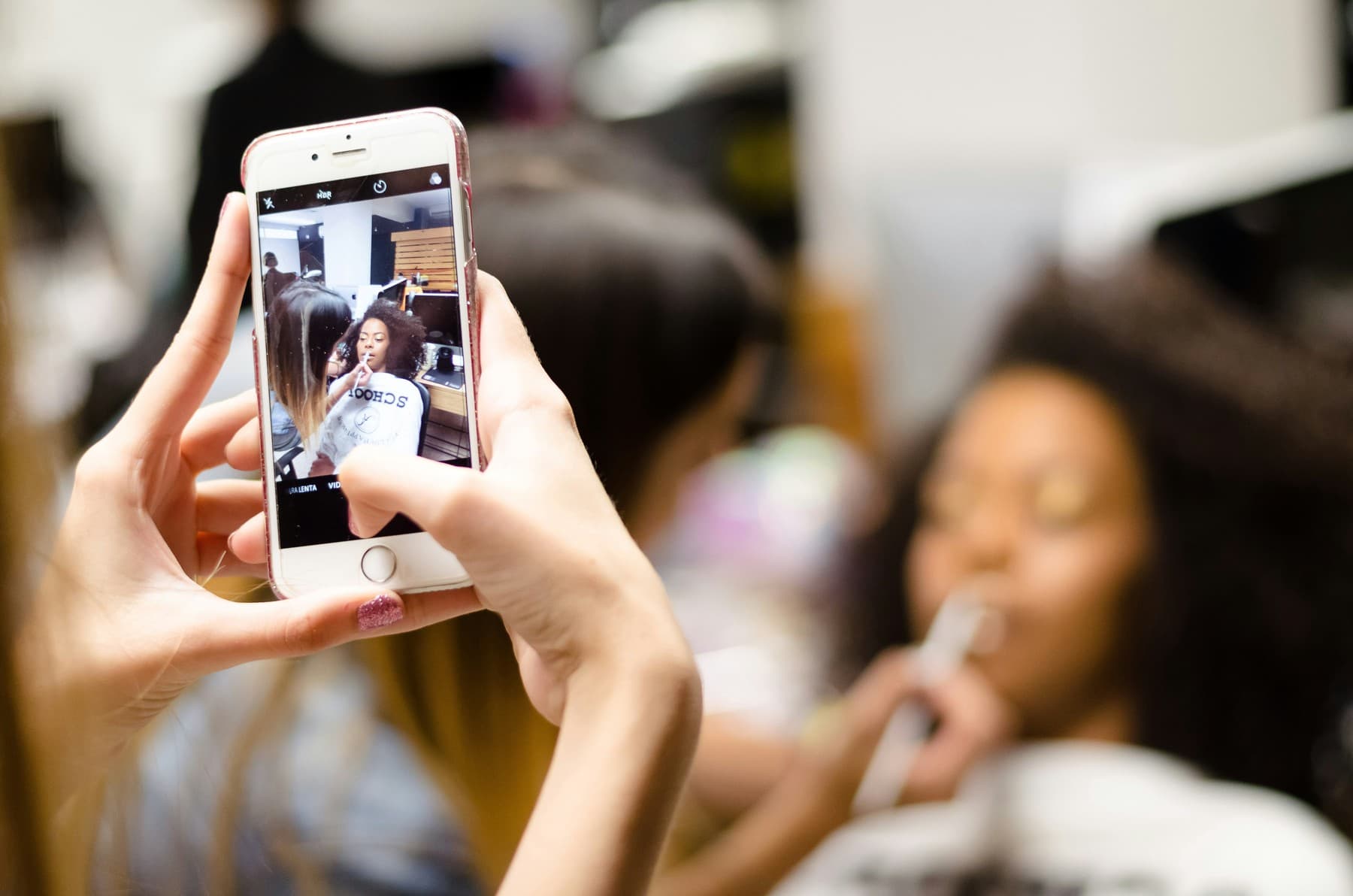
A salon already contains more content than most owners realise. Consultations, colour mixing, sectioning, product choices, tool preparation, aftercare explanations and the final reveal all carry information that a new client may value. The practical task is to capture a few useful moments without turning the appointment into a production set.
Choose two or three repeatable shots for each service. For example, record a five-second view of the starting condition, a close-up of one meaningful stage and the client’s final movement or reveal. This creates enough material for a concise Reel while keeping the stylist focused on the client in the chair.
Consent needs to be clear, especially when faces, personal stories or sensitive treatments are involved. Ask before filming, explain where the material may appear and offer alternatives such as back-of-head images, cropped details or hands-only footage. A client who prefers privacy can still contribute useful material without feeling pressured to become part of the salon’s marketing.
A weekly planning habit stops strong appointment footage from disappearing into a camera roll. Group approved images by service, stylist and client question, then choose content according to what the salon needs that week. An Instagram content platform for beauty businesses such as Asteris can help prepare posts from the salon’s own media while leaving approval with the team.
Stories and Highlights then provide the most current layer of proof. Useful Highlight names include “New Here”, “Colour”, “Curls”, “Nails”, “Facials”, “Reviews” and “Book”, depending on the salon’s services. Keep each Highlight focused enough that a visitor can find an answer without tapping through months of unrelated clips.
Answer the quiet objections
Someone choosing a new salon often has concerns they will never write in a comment. They may wonder whether the stylist understands their hair texture, whether the price includes toner or whether they can park nearby. Content that answers these questions may earn fewer likes while having more influence on bookings.
Write down the questions asked by first-time clients during calls, consultations and direct messages. Each repeated question can become a post, because repetition in the salon usually signals uncertainty in the market. A carousel on “what happens at your first colour consultation” can explain timing, patch testing, strand testing, pricing and the information a client should bring.
Pricing deserves particular care. A vague “prices from” graphic can create more confusion when the final cost depends on hair length, density, existing colour or service complexity. Explain what changes the price, give realistic examples and tell people how to request an accurate quote.
Show who performs the service as often as you show the finished result. A short stylist introduction can mention their specialist area, the appointments they most enjoy and the type of client concern they regularly solve. New clients are booking time with a person, so a feed filled only with anonymous close-ups leaves an important part of the decision unanswered.
Client proof works best when it contains detail. “Lovely salon, highly recommend” is pleasant but weak evidence, while a review describing how the stylist handled thick curls, explained the process and made the client feel comfortable gives a stranger something concrete to trust. With permission, pair that review with the relevant result or a quiet image from the appointment.
Make booking feel straightforward
Once a person is interested, the profile should make the next action obvious. Meta allows eligible Instagram business profiles to use action buttons, including a booking option through supported partners.5 Whether the salon uses that button, a bio link or direct messages, the route should lead to current services, prices where appropriate and genuine availability.
Calls to action work better when they match the post. A balayage result could invite people with a similar starting colour to send a photograph for an initial assessment, while a first-visit carousel can link directly to the consultation booking page. Repeating “book now” under every image trains followers to ignore the instruction.
Stories are well suited to time-sensitive availability. A stylist can show a cancellation slot with the date, time, service length and booking method, then remove or update it once filled. Clear information respects the viewer’s time and avoids the artificial urgency that can make a local business feel less trustworthy.
Direct messages reveal where the booking process is creating friction. Repeated questions about choosing between services point to unclear booking descriptions and a useful topic for the feed. Price questions may mean the website link is difficult to find.
Trackable links can show whether Stories, the bio or direct messages are producing website visits and bookings.6 The numbers do not need to become a complicated reporting project. A simple monthly record of booking-link taps, consultation requests and confirmed new-client appointments is enough to expose whether Instagram activity is helping the diary.
Read the signals that matter
Follower count is a poor measure of local business health when many followers live too far away to become clients. A salon with 900 relevant followers in its service area can have a stronger acquisition channel than one with 9,000 scattered followers. The useful question is whether content reaches nearby non-followers and moves some of them towards an enquiry or booking.
Instagram Insights can show reach, engagement, profile activity and follower information for professional accounts.6 Watch non-follower reach for discovery, saves and shares for consideration, profile visits for curiosity, then website taps, calls, messages and booking actions for intent. Sprout Social’s small-business analytics guidance similarly recommends paying more attention to high-intent actions than raw follower totals.6
Different formats should be judged by the job they perform. A Reel may reach many non-followers but produce few immediate bookings, while a detailed carousel may reach fewer people and generate several saves or consultation enquiries. Both can be useful when one brings people into the profile and the other helps them make a decision.
Review results over a month rather than changing direction after one weak post. Look for combinations of service, format, stylist and caption topic that produce meaningful actions. Then make a new version using a different client and result.
The salon should also record how new clients heard about it. Add a simple question to the booking or consultation process and keep the answers in a monthly tally. Instagram will sometimes influence a booking that is later completed through Google, a phone call or a recommendation, so platform analytics alone will miss part of the story.
Become the salon they recognise
A local client may follow for weeks before their current stylist becomes unavailable, they move house, an event appears in the calendar or they finally decide to change their hair. During that time, repeated exposure builds familiarity. The salon that has consistently shown relevant work, clear answers and recognisable people is easier to choose when the moment arrives.
This is why a useful salon feed should feel like a record of real work rather than a catalogue assembled for strangers. The small details matter: the stylist explaining a choice, the client’s starting point, the street outside, the realistic maintenance advice and the calm response to a common concern. Together, they make the business easier to understand before anyone steps through the door.
The aim is not to make every post travel widely. It is to make the right local person pause, recognise their own need and feel comfortable taking the next step. A salon earns that response through specific evidence collected from ordinary appointments and published with care.
Sources
Footnotes
April 2026 update on rewarding original creators across photos and Reels, Instagram for Creators↩
Information on booking and other action buttons for Instagram business profiles, Meta Business Help Centre↩
Guidance on measuring Instagram activity against bookings, visits and high-intent actions, Sprout Social↩↩2↩3