
Help Local Strangers Choose Dinner
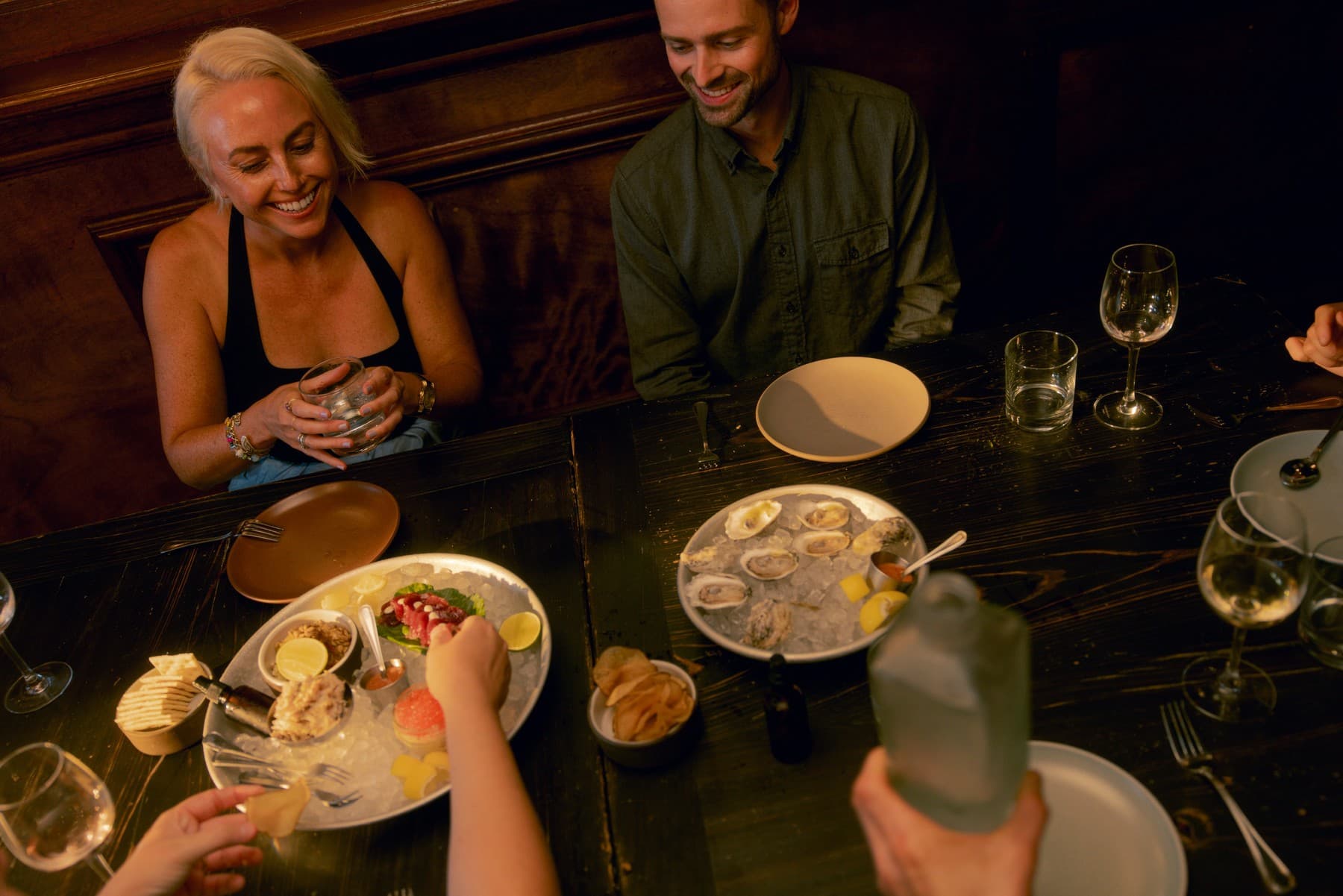
Restaurants get more Instagram engagement from local non-followers by making posts useful to people choosing where to eat nearby. Reels should show atmosphere, movement, and the food decision clearly. Captions, location tags, keywords, and save-worthy details help strangers act.
The mistake many restaurants make on Instagram is treating every post as a small advert for people who already know them. A follower may understand the room, the menu, the location, and the vibe from one close-up of a plate. A local stranger scrolling after work, planning Saturday lunch, or looking for somewhere with friends needs more clues.
Reach follows intent
Instagram is no longer a simple follower feed, and that matters a lot for restaurants. Hootsuite describes Instagram as using separate ranking systems across Feed, Stories, Reels, and Explore, with signals such as user activity, popularity, recency, format preference, and interaction behaviour shaping what appears for each person.1 Buffer makes the same practical point for brands, noting that Explore and Reels are important discovery surfaces because they help people find accounts they do not already follow.2
For a restaurant, that means non-follower reach is less about asking the algorithm for a favour and more about matching a moment of intent. Someone who watches three brunch videos, saves a dog-friendly cafe post, or shares a cocktail Reel with a friend has given Instagram a set of clues. Your job is to create posts that fit those clues without becoming bland or gimmicky.
This is where a lot of restaurant content gets stuck. A dish shot may be beautiful, but beauty on its own does not always give a stranger a reason to engage. A good local discovery post answers a live question, such as where to go before the theatre, which cafe has outdoor tables, what to order as a vegetarian, or whether the place feels right for a birthday dinner.
The more specific the post, the easier it is for Instagram and for the person watching to understand it. "Fresh pasta tonight" is pleasant, but "handmade crab ravioli in Cambridge, served from 6 pm, near the station" carries far more useful context. It gives the platform keywords, gives the viewer a reason to save, and gives a friend something specific to reply to in a DM.
Make the post locatable
Local non-followers do not usually discover restaurants in a vacuum. They are often searching, browsing, comparing, or being sent a post by someone who knows their taste. Instagram search considers text signals such as captions, account names, hashtags, and places, and Instagram says search is designed to rank results based on what someone enters and how relevant the result appears.3
That is why restaurant captions should sound natural but still contain the words a local customer would use. A caption can say "date night in Cambridge", "late lunch near King's Cross", "family-friendly pizza in Bristol", or "seafood by the harbour" without sounding like SEO spam. These phrases do not ruin the mood, because they are how real people describe eating out when they are making plans.
The same principle applies to location tags and neighbourhood references. Tagging the city is useful, but tagging the neighbourhood, street, market, or landmark can be more powerful when people are planning around proximity. A restaurant near a train station, theatre, university, beach, office district, or shopping street should say so often enough that its Instagram presence starts to behave like a local guide.
Hashtags still have a role, but the role has changed. Later reports that Instagram hashtags are now capped at five per post and Reel, and argues that hashtags work more as classification signals than as standalone reach engines.4 That fits restaurant marketing well, because five careful tags can do more for relevance than a crowded block of generic food tags.
A practical local tag set might include one cuisine tag, one neighbourhood tag, one city tag, one occasion tag, and one branded or venue tag. For example, a Thai restaurant could use a mix around Thai food, its neighbourhood, its city, date night, and its own restaurant name. That approach is not about chasing massive tags, it is about helping the right local people understand why the post belongs in their feed.
Show the decision
Reels work well for restaurants because eating out is not only a product decision. It is a sensory and social decision, and short video can show pace, sound, warmth, lighting, staff movement, tables filling, and the small details that a static image often misses. Brew's 2026 hospitality content guidance argues that short-form video continues to drive high reach and discovery for restaurants, especially because it shows atmosphere as well as food.5
The strongest restaurant Reels often have a clear decision built into the first few seconds. They do not begin with a vague exterior shot or a slow pan across a room. They begin with the thing a local stranger is already weighing up: the bubbling dish, the first pour, the table by the window, the lunch special being plated, or the energy at 7.30 pm.
That does not mean every Reel needs a loud hook or a trend format. A restaurant can be calm, elegant, funny, homely, experimental, or old-school and still make the decision visible. The test is whether a stranger can understand in three seconds what kind of visit this post is helping them imagine.
A weekly restaurant plan for non-follower engagement can stay simple. It should cover the points where a local customer moves from noticing you to planning a visit. This mix gives the restaurant a practical rhythm without asking the owner to invent a new campaign every day. Use it as a starting point.
The point is not to produce endless content. The point is to stop posting isolated fragments and start posting decisions. Asteris for restaurants is built around this idea, using a business's own photos and videos to plan Instagram content around the moments most likely to make someone stop, understand, and act, which is especially useful when owners do not have time to rebuild their content plan every week.
Shares beat polite likes
A like is a weak signal for a restaurant because it can mean very little. Someone may like a pasta photo because it looks nice, then forget it two seconds later. A save or a DM share is more meaningful because it usually means the post has entered a plan, a craving, a conversation, or a possible visit.
This matches how current Instagram strategy is shifting. Hootsuite lists shares, saves, watch time, likes, and meaningful interactions among the signals that matter for visibility, while Buffer highlights DM sends as a major distribution signal for Reels.12 For restaurants, that makes shareability less about being funny and more about being useful enough to send to someone else.
The best share triggers are often ordinary. A post about "where to eat after a late film", "three dishes to order if you do not eat meat", or "the table to book if you want a quieter dinner" gives people a reason to send it to a partner, friend, colleague, or visiting family member. That is a very different mindset from posting "book now" on every caption and hoping urgency does the work.
Restaurants should also pay attention to comments, but not in the shallow "comment your favourite" way. A better prompt invites a real decision or memory, such as asking which of three specials should stay on the menu or whether people prefer the window table or the bar seats. These comments give the restaurant useful feedback and give Instagram another signal that the post is creating a live interaction.
This is why carousels still belong in a restaurant strategy. Reels may do more discovery work, but carousels are useful when a person wants to compare options, save a mini guide, or send a menu-style recommendation. Sprout Social's Instagram best practice guidance stresses intentional content, community engagement, and data-informed decisions rather than posting constantly for the sake of volume.6
Non-followers need proof
A follower may trust your restaurant because they have been before. A non-follower is still trying to work out whether the place is worth their evening, money, and social risk. Content for that person needs proof, not hype.
Proof can be visual, practical, or social. It can be a busy room on a wet Tuesday, a chef finishing a dish, a server explaining the special, a regular's favourite order, a queue at the counter, or a quick look at how the menu handles dietary needs. None of this needs to feel polished, but it does need to feel real.
Originality matters here in a practical sense, not as a moral slogan. Meta and Instagram have been moving recommendation systems towards original content and away from reposted or low-effort reused material, with recent reporting noting that the original-content push has expanded beyond Reels into photos and carousels.7 For restaurants, the advantage is obvious, because the most persuasive content is already sitting in the kitchen, on the pass, and around the tables.
This is also where AI can either help or make the problem worse. If AI produces generic captions over generic food imagery, the restaurant becomes less recognisable at the exact moment when recognition matters. If AI helps the owner choose the strongest original clip, sharpen the local angle, and keep the tone consistent, it can make the restaurant's own proof easier to publish.
Proof also reduces the pressure to chase trends. A local non-follower does not need every restaurant to use the same audio, the same joke, or the same editing style. They need a confident sense of what the place is, what the visit feels like, and whether it fits the plan they are making.
Search changed the shelf life
Local engagement is no longer only about what happens inside the Instagram app on the day a post is published. Since July 2025, public content from professional Instagram accounts has been able to appear in Google and Bing search results, according to reporting on the change from IIH Nordic and Crisp.89 That means a restaurant's public Reels, images, captions, and videos can have a longer discovery life than many owners assume.
This should change how restaurants write captions. A vague caption may feel stylish in the feed, but it gives search engines, AI answer tools, and potential customers very little to work with. A useful caption can still have personality while naming the dish, cuisine, neighbourhood, city, and occasion.
Think of each strong post as a small searchable page for a real customer question. "Sunday roast near Clapham Common", "pre-theatre noodles in Soho", or "quiet lunch spot in Cambridge with outdoor seating" are not stiff phrases when they reflect the actual offer. They are the bridge between how people search and how restaurants are discovered.
This does not mean Instagram should become a keyword dump. People still engage with posts that feel human, timely, and visually honest. The better approach is to write like a helpful local would speak: clear enough for search, warm enough for people, and specific enough that the right stranger knows why the post matters.
The stranger is the strategy
The restaurant accounts that win local non-follower engagement are not always the loudest or most polished. They are the ones that repeatedly make the next visit easier to picture. They show enough of the food, room, route, timing, occasion, and customer experience for a stranger to move from passive scrolling to active planning.
That shift requires a different content habit. Before posting, ask who the post helps and what decision it supports. If the answer is vague, the post may still be attractive, but it is unlikely to earn saves, shares, comments, or visits from people who have no existing relationship with the restaurant.
The opportunity for restaurants is that local Instagram engagement does not require pretending to be a media company. It requires noticing the small moments customers already care about and publishing them with enough context. The kitchen already has movement, the floor already has atmosphere, and the menu already has stories.
A good content system turns those raw moments into a steady public memory of the restaurant. Not a feed full of disconnected plates, but a set of useful signals for people nearby. When a local stranger sees the post and thinks, "send me that place", the strategy is working.
Sources
Footnotes
Instagram best practices covering intentional content, community engagement, and data-informed strategy, Sprout Social↩
Reporting on public professional Instagram content becoming indexable by Google and Bing from July 2025, IIH Nordic↩