
The Audience Advertising Cannot Buy
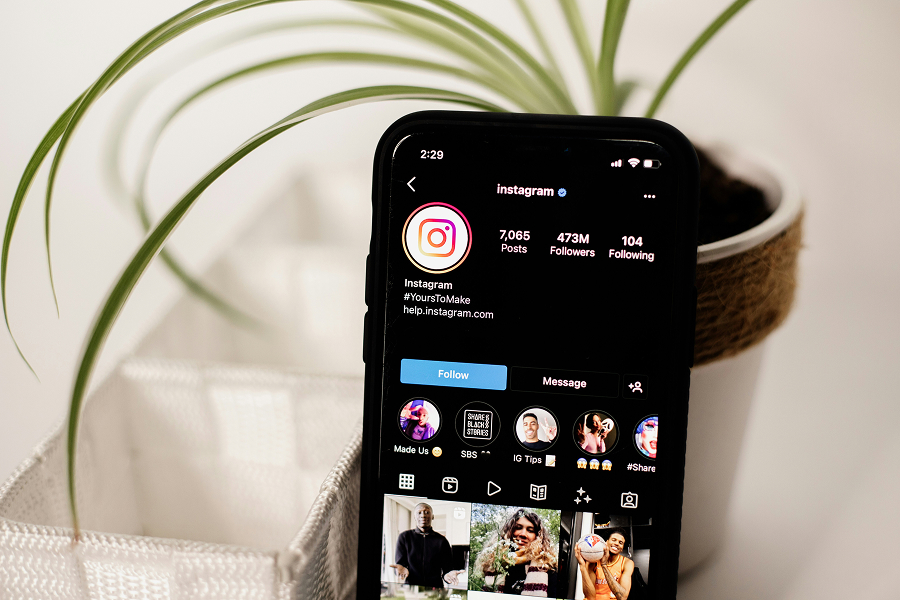
Small businesses can grow their Instagram following without paid ads by posting Reels three to four times per week for reach, carousels two to three times per week for saves and engagement, and maintaining a consistent brand identity throughout. In 2026, Instagram's algorithm explicitly rewards original content and penalises cross-posted material. Shares and DM sends now carry more algorithmic weight than likes.1
Most conversations about Instagram growth start with the question of paid versus organic reach. The more useful question is what kind of audience you are actually trying to build, because the two approaches produce fundamentally different results. The businesses building Instagram followings that convert to real revenue are not necessarily the ones running the best ads.
The algorithm has picked its favourites
Instagram no longer runs on a single algorithm. It uses separate ranking systems for the Feed, Reels, Explore, and Stories, and each surface rewards different behaviour.2 For small businesses trying to grow without ad spend, the most important distinction is between Reels and carousels, because these two formats now serve different strategic functions and should not be treated as interchangeable.
Reels remain the primary organic discovery engine on the platform. Instagram's official Creators account has confirmed that Reels are shown to roughly twice as many non-followers as photo posts, making them the most reliable format for reaching people who have never heard of your business.3 The critical ranking signal for Reels distribution is not likes or even comments: it is shares via DM. When someone sends a Reel to a specific person, Instagram reads that as evidence that the content sparked a real connection, and it distributes the video more widely as a result.4 For a restaurant, that might mean a Reel of a dish being plated gets sent from one friend to another with a "we need to go here." That single share does more for algorithmic reach than fifty likes from people who will never visit.
Carousels serve a different purpose and reward different content. Analysis of 35 million Instagram posts found that carousels generate the highest number of saves of any format, with an engagement rate that has remained more resilient than static images year over year.5 The mechanism is straightforward: every slide a viewer swipes through sends a signal to the algorithm that they found the content worth engaging with beyond the first glance. A salon that posts a six-slide carousel showing the technique behind a colour transformation, with captions explaining each stage, gives viewers something genuinely worth saving. That save gets them back in front of the account the next time they open Instagram, and the algorithm treats the save as a strong signal to distribute the post more widely to similar audiences. The optimal content mix for most small businesses in 2026 is three to four Reels per week combined with two to three carousels, with static posts used selectively rather than as the primary format.6
Small accounts hold a structural advantage
The most counterintuitive thing about organic Instagram growth in 2026 is that small accounts are better positioned for it than large ones. Accounts with under 10,000 followers see average engagement rates of 3.8%, compared to 1.1% for accounts with over one million followers.7 Accounts under 50,000 followers sit in what growth researchers describe as the sweet spot for organic expansion: the algorithm is more willing to test their content against new audiences, and their engaged communities generate the kinds of early engagement signals that trigger broader distribution.8
This matters practically because it means a boutique with 2,000 followers has a structural algorithmic advantage over a national fashion brand with 200,000, provided that boutique is posting consistently and generating genuine engagement. The algorithm's early-engagement window determines how widely each post gets distributed: if the initial cohort of viewers engages through saves, shares, or comments within the first 30 to 60 minutes of posting, the post gets pushed to a larger audience.9 A small, loyal, genuinely engaged following creates better conditions for that initial window than a large, indifferent one accumulated through years of paid promotions.
The implication for small businesses is significant. The gap between a 2,000-follower account and a 20,000-follower account is not primarily a budget problem. It is a content consistency problem and, more fundamentally, a brand clarity problem. Businesses that know exactly who they are posting for and what their content is consistently trying to express are the ones whose small audiences generate the early-engagement signals that trigger broader algorithmic distribution.
Consistency now has a longer memory
One of the most significant changes to Instagram's ranking systems in 2026 is that inconsistent posting now carries a longer recovery window than it used to.10 If an account goes quiet for two weeks, the next post does not immediately resume at the previous reach levels. The algorithm deprioritises accounts that it has classified as intermittent, and rebuilding that classification takes sustained consistent activity, not a single strong post. This makes the decision about posting cadence more consequential than it was in previous years, because the cost of dropping the habit is higher.
For small business owners managing social media alongside every other operational demand, this means the right posting cadence is not the highest one they can sustain for a month. It is the one they can sustain indefinitely. Three well-considered posts per week, every week, will produce better algorithmic outcomes than seven posts one week and silence for the next two. Batch content creation, where photography, captioning, and scheduling all happen in dedicated blocks rather than daily, is the most practical way to achieve this consistency without making Instagram the dominant time demand on the business. A weekly planning session of two to three hours produces more coherent, on-brand content than daily improvisation, and it is far easier to protect as a recurring commitment in a busy operational calendar.
The accounts that maintain consistency without burning out have typically made one prior decision: they know what their feed is for and what it is not for. That clarity makes every scheduling decision faster, because the question is never "what should we post?" but "which of these options best reflects what we are this week?" An Instagram content management system built around that kind of structured planning, one that holds the brand's identity as the constant and treats content creation as a repeatable process, is what separates the accounts that sustain momentum from the ones that publish in bursts and lose ground in between.
What the algorithm cannot manufacture
Instagram's 2026 algorithm updates include an explicit originality signal that penalises content reposted from other accounts, watermarked from TikTok, or recycled without meaningful additions.11 This is not a minor technical change. It is a values statement from the platform: content that is genuinely original, made for this audience, from this creator, using their own material, is what Instagram wants to surface. For small businesses, this is a competitive advantage rather than a constraint.
Large brands frequently cross-post across platforms, repurpose assets from paid campaigns, and produce content that could belong to any account in their category. A small restaurant that films its own kitchen, shows its actual suppliers, and writes captions in the voice its regulars recognise at the pass is producing something the algorithm treats as categorically different. An AI social media assistant that works from a business's own photos and videos, rather than generating stock-style content from a category brief, produces output that carries this originality signal rather than diluting it. The distinction matters because the algorithm is increasingly sophisticated at identifying content that is genuinely specific versus content that is technically new but structurally interchangeable with everything else in the category.
Brand identity, in this context, is not a brand guidelines document or a colour palette. It is the consistent perspective a business brings to every post: what it chooses to show, how it frames things, which details it considers worth sharing. The fish and chip shop that photographs its weekly catch coming off the boat in Whitby has a perspective. The salon that documents the science behind why it avoids certain chemical processes has a perspective. The boutique that always shoots its new arrivals on location in the neighbourhood, never in a studio, has a perspective. These are not marketing tactics. They are decisions about what the account stands for, and they are what makes content irreplaceable rather than interchangeable.
How do you build content that earns shares?
The question worth asking before publishing anything on Instagram is not "will this get a reaction?" but "would someone send this to a specific person they know?" That framing shifts the creative objective from broad appeal to precise relevance. Broad appeal produces likes from people who will forget the account within minutes. Precise relevance produces shares, saves, and the kind of follower who will notice if you stop posting.
For restaurants and food businesses, content that earns shares tends to be either highly specific, the best Sunday roast in Didsbury, or genuinely useful, the exact technique for achieving that texture. For salons, it tends to be content that a client would send to a friend who mentioned wanting something similar: a transformation with enough visual detail and explanation that the friend can decide if it is right for them. For fashion boutiques and ecommerce brands, shareable content often solves a specific styling problem that the sender's friend recently mentioned. Vague "lifestyle" content that could be anybody's brand attracts no one in particular, because there is no specific person it is exactly right for.
The practical approach is to plan content with the share in mind from the start. Before a post goes into the production queue, it is worth asking who would send this, to whom, and why right now. If the answer is uncertain, the content concept needs sharpening. This is not about chasing virality. It is about creating content with enough specificity and genuine utility that it earns the kind of high-commitment engagement actions that the algorithm treats as evidence of quality. An on-brand AI content generator built around a business's own media library and established voice can accelerate this process significantly, but the creative judgment about what is worth sharing has to come from someone who understands the business and its audience. That is the part AI amplifies. It is not the part AI replaces.
The compound effect of doing it right
The businesses that have built Instagram followings worth having are not the ones that won a single viral moment and rode it. They are the ones that chose a sustainable cadence, developed a recognisable perspective, and let those two things compound over time. The algorithm has shifted to reward exactly this kind of account: one that posts original, consistent, high-specificity content and generates the save and share signals that indicate real audience interest rather than passive scroll behaviour.
For small businesses, the structural advantages are real and should not be underestimated. Smaller audiences generate higher engagement rates. Original content outperforms cross-posted material under the 2026 algorithm updates. Consistency, once established, builds an algorithmic classification that makes each subsequent post more likely to reach the right people. None of this requires a marketing budget. It requires a content strategy built around something the business genuinely has to say, and the discipline to show up with it consistently enough that the algorithm learns what kind of audience it is for.
The follower count at the end of that process looks different from the one produced by a paid campaign. It is smaller in the short term and considerably more valuable over time. The accounts that understand that distinction are the ones building something that does not disappear when the budget does.
Sources
Footnotes
Instagram's separate ranking systems for Feed, Reels, Stories and Explore, Sprout Social↩
Reels reaching twice as many non-followers as photo posts, SocialBotify↩
Carousel engagement resilience from analysis of 35 million Instagram posts, Social Insider↩
Recommended content mix of 3-4 Reels and 2-3 carousels per week, TrueFuture Media↩
Accounts under 50,000 followers in the sweet spot for organic growth, TrueFuture Media↩
Early-engagement window of 30-60 minutes determining algorithmic distribution, SocialBotify↩